Nusa Drive
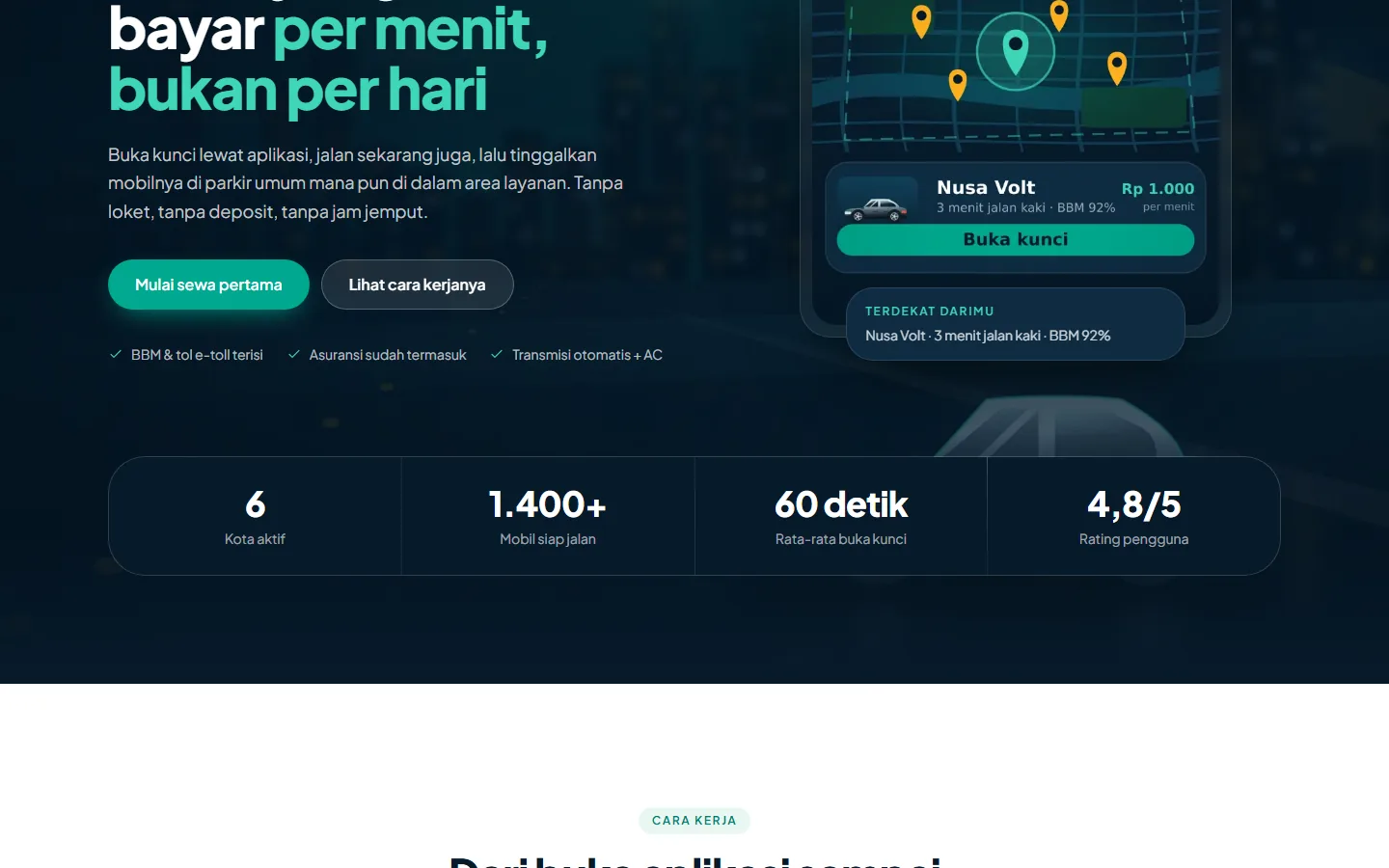
Carsharing priced by the minute. Drivers can find, unlock, use, and park a car without visiting a counter or paying a deposit.
Challenge
Daily car rental makes little sense for a trip that lasts a couple of hours.
A conventional rental commits you to a daily rate, a pickup window, a counter, a deposit, and a return to the place you started. For a two-hour errand that is the wrong unit of both time and money, and every one of those steps is a reason not to bother.
The price is its own problem. Fuel, tolls, insurance and parking are settled afterwards, so the number quoted at the start is not the number paid at the end — and an unpredictable cost gets avoided even when it turns out to be small.
Nusa Drive is built on the opposite promise: pay for the minutes you use, see the final price before you start, and end the trip wherever you happen to be inside the service area.
- Falls shortA conventional daily rentalA counter, a deposit, a pickup window and a return to where you started, all priced by the day for a trip measured in hours.
- Falls shortRide-hailingSolves the short trip and not the errand: no boot, no waiting, no driving yourself somewhere and back.
- Falls shortOwning a second carThe comparison the site makes directly, and the one where insurance, parking and depreciation are paid whether the car moves or not.
Harga yang kamu lihat sudah harga akhir.
Research & framing
Structure, flows & trade-offs
The page is ordered by the questions a first-time renter actually asks.
Navigation follows the decision rather than the company: how it works, the fleet, the price, the service area, protection, then the FAQ.
How it works is four steps, each with its own heading — register once with a five-minute verification, find a nearby car and hold it free for twenty minutes, unlock from the app and drive, park anywhere inside the service zone. Four is short enough to read before committing to anything.
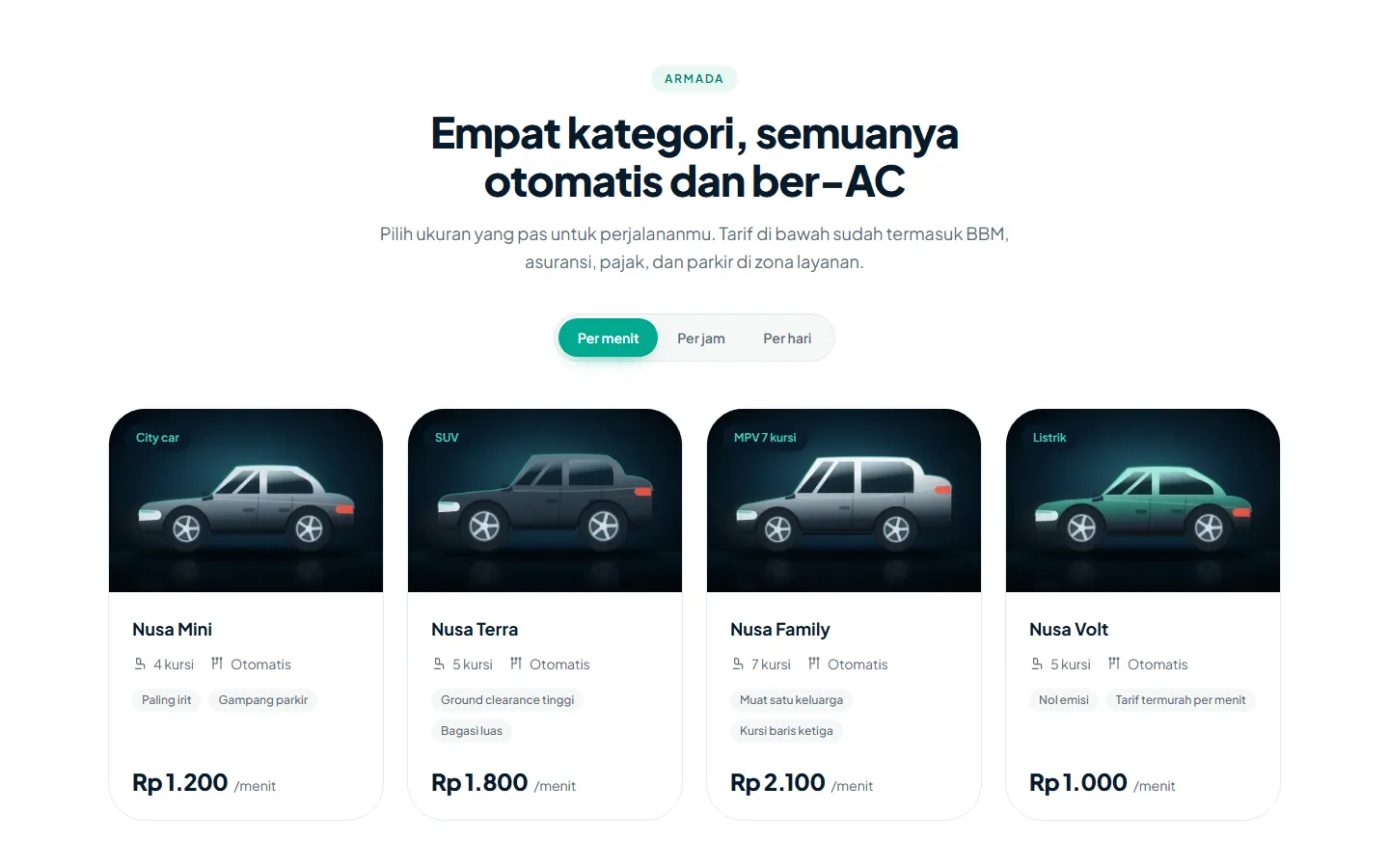
The fleet is grouped into four categories — Nusa Mini, Nusa Terra, Nusa Family and Nusa Volt — all automatic and air-conditioned, so the choice is about the trip rather than about specification. Coverage is stated concretely as six active cities with two more marked as coming, instead of an unqualified claim of national availability.
- ChosenNavigation ordered by the renter’s questionsHow it works, the fleet, the price, the area, protection, and FAQ follow the order in which a renter usually makes the decision.
- ChosenA free twenty-minute holdThe car stays available while the renter walks to it, which removes a common worry from the first booking.
- ChosenCheapest applicable tariff selected automaticallyPer-minute, per-hour and per-day are all shown, but the system picks. Optimising a tariff is not work the renter should be doing.
The fleet sits behind a per-minute, per-hour and per-day toggle. That is a quiet but important concession: the product argues for the minute, and then lets you check the other two anyway, because a renter comparing against a conventional daily rate needs to see the comparison rather than be told the answer.
Solution
Each screen removes one specific reason to hesitate.
A map-first home. Nearby cars and their per-minute price appear together, because either fact on its own is not enough to decide on.
A free hold. Locking a car for twenty minutes at no cost turns "will it still be there when I arrive" from a risk into a non-question.
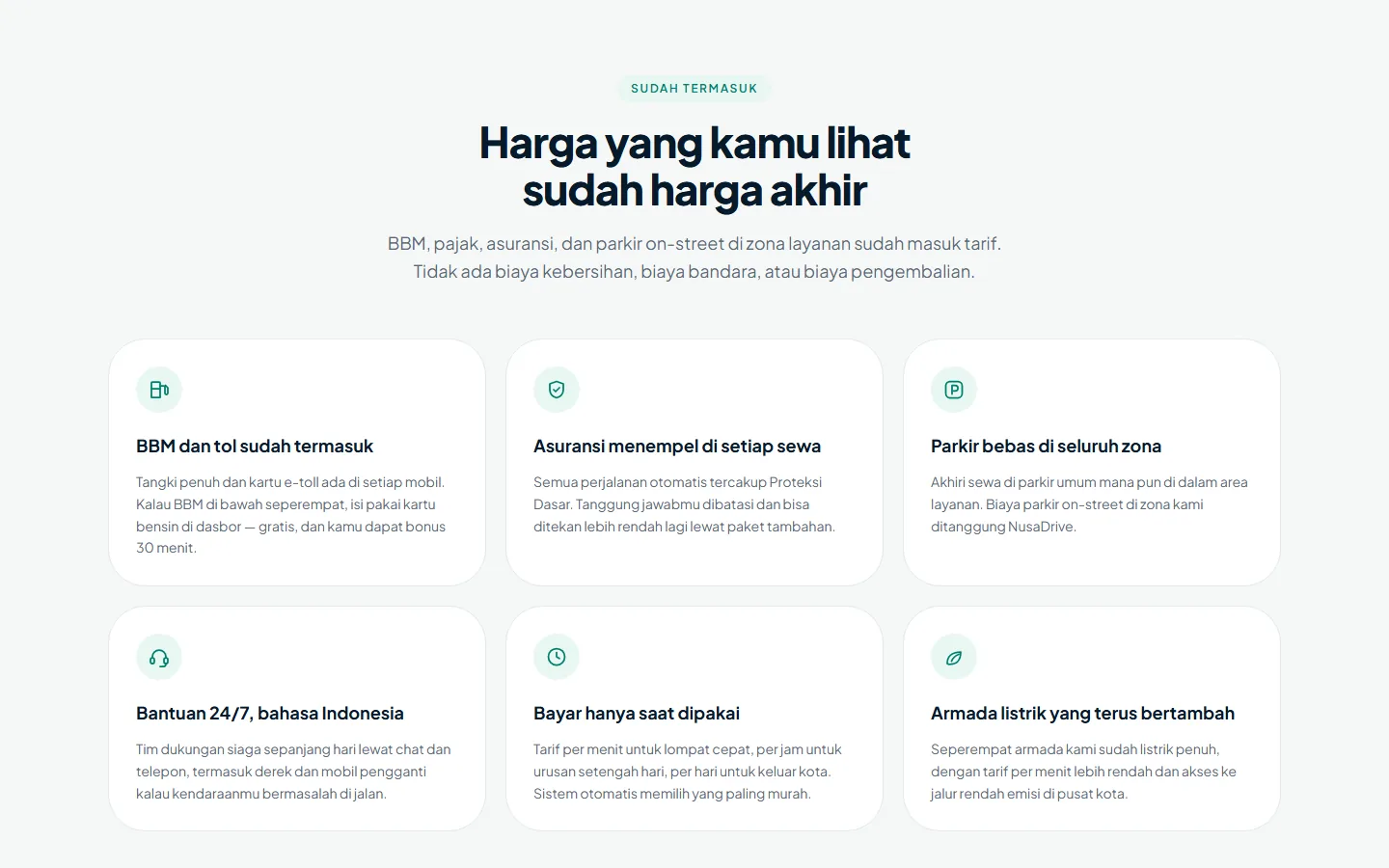
Final pricing, stated as final. Fuel and tolls are inside the number, insurance attaches from the first minute, and parking is free across the zone. The system also picks the cheapest applicable tariff rather than leaving that as an optimisation the renter has to perform.
Zone-based return. Ending the trip anywhere inside the service area removes the return leg, which is the single constraint that makes short rentals not worth taking.
Support named in the open. Around-the-clock help in Indonesian, stated on the page rather than discovered later, because the unfamiliar part of an unfamiliar model is knowing who to ask.
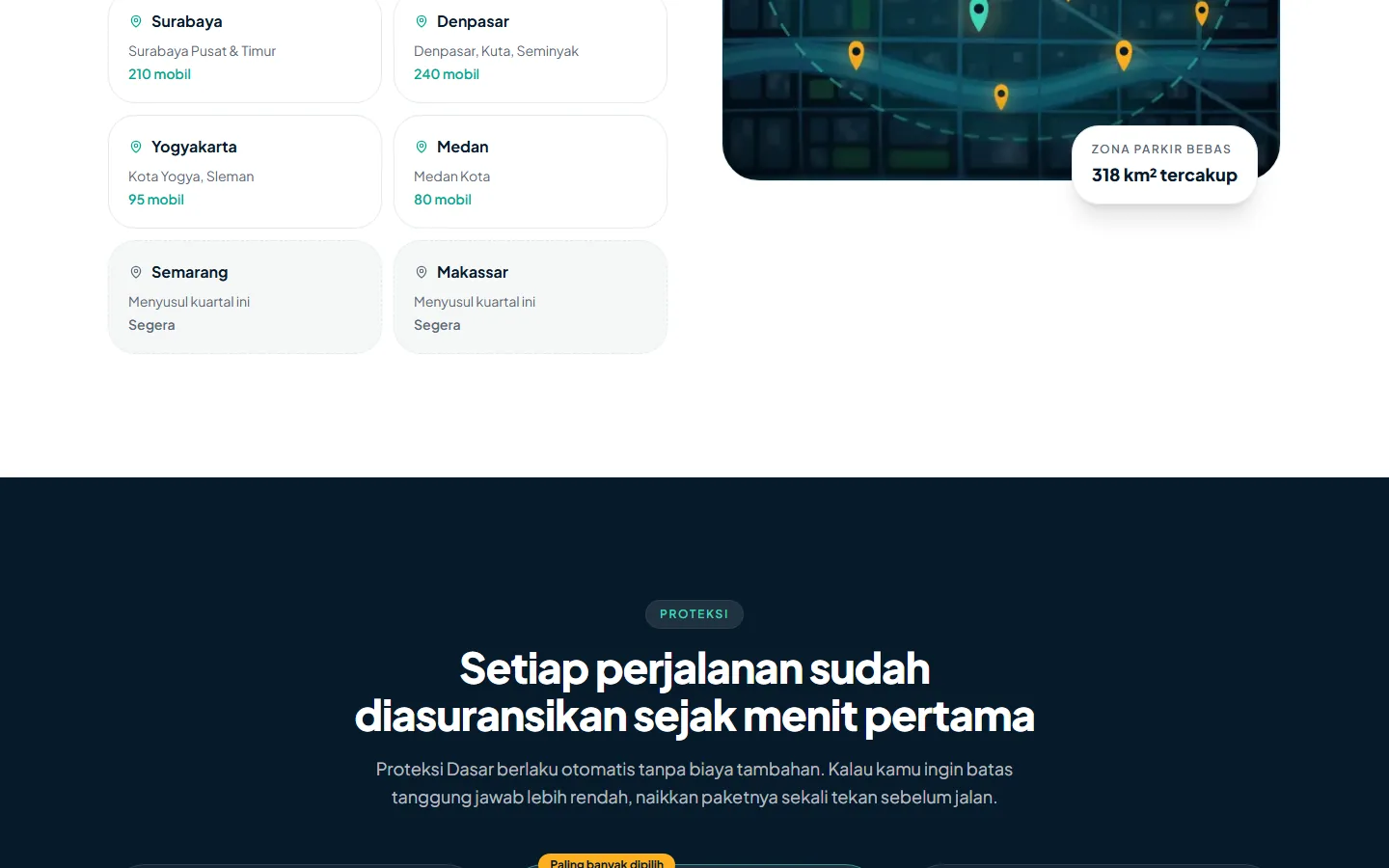
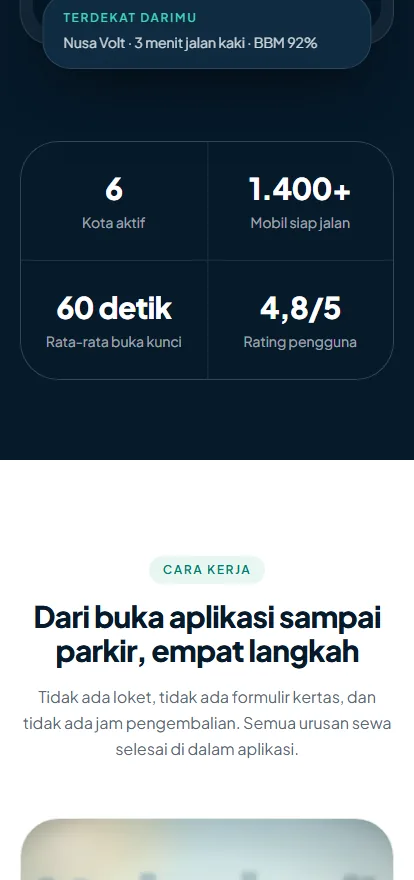
Coverage is drawn as well as listed — six cities with car counts beside a map marking a free-parking zone of 318 square kilometres. For a model whose whole promise is "leave it anywhere in the area", the area has to be a shape you can look at, not a list of city names.
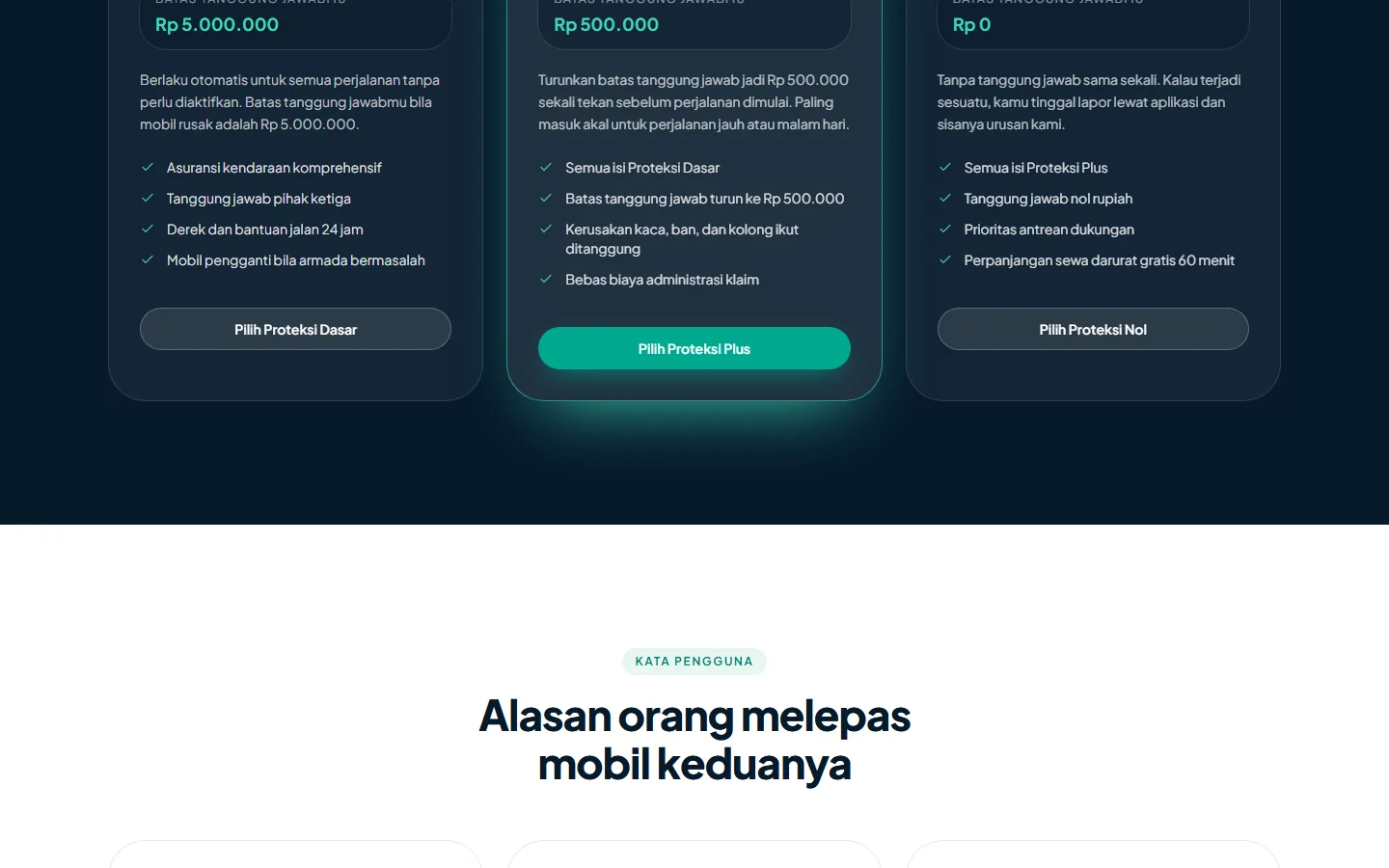
Protection is offered as three tiers priced by excess, each spelling out what it covers. Insurance is where per-minute rental feels riskiest to a first-time renter, so it is stated as a choice with numbers attached rather than as reassurance.
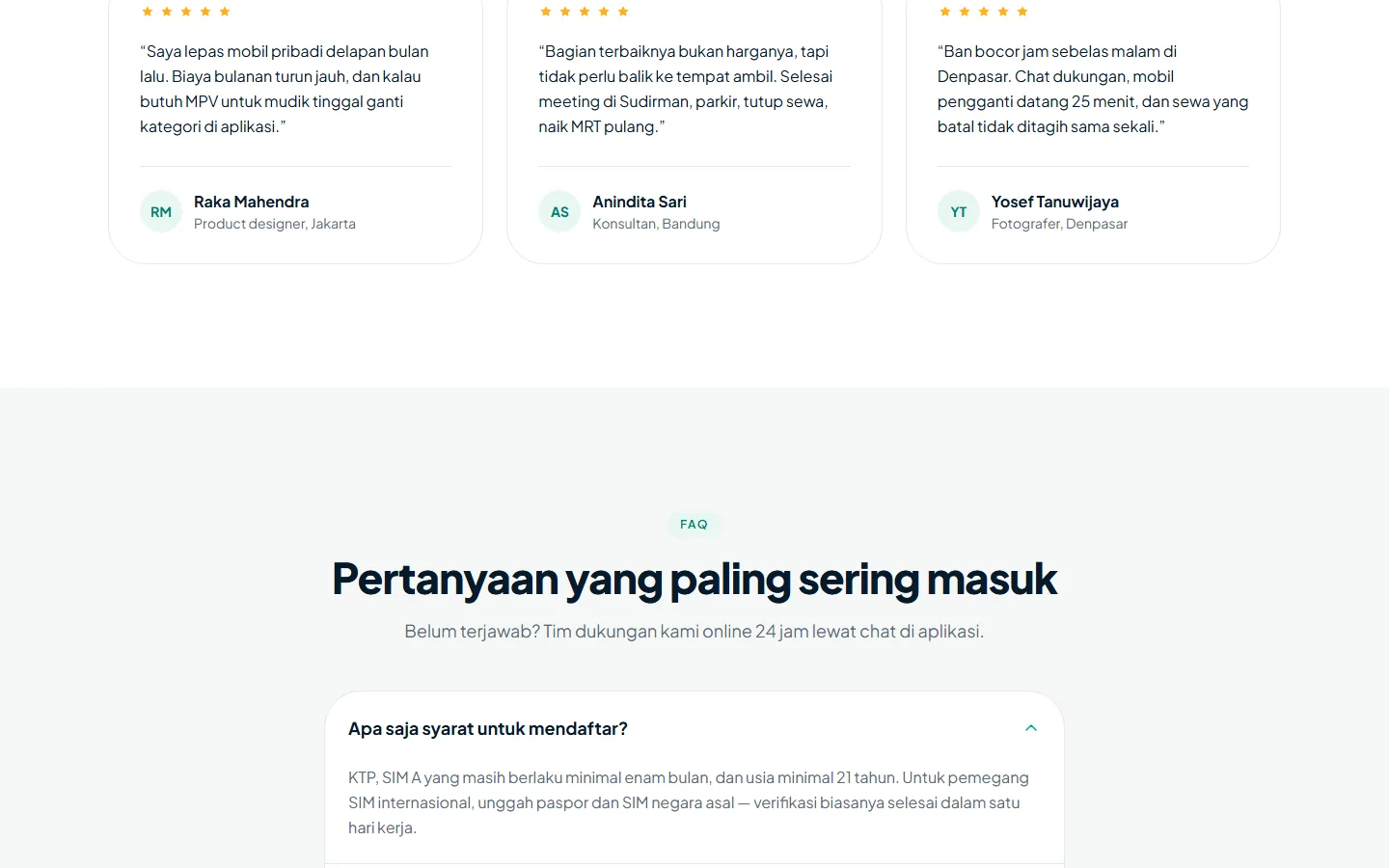
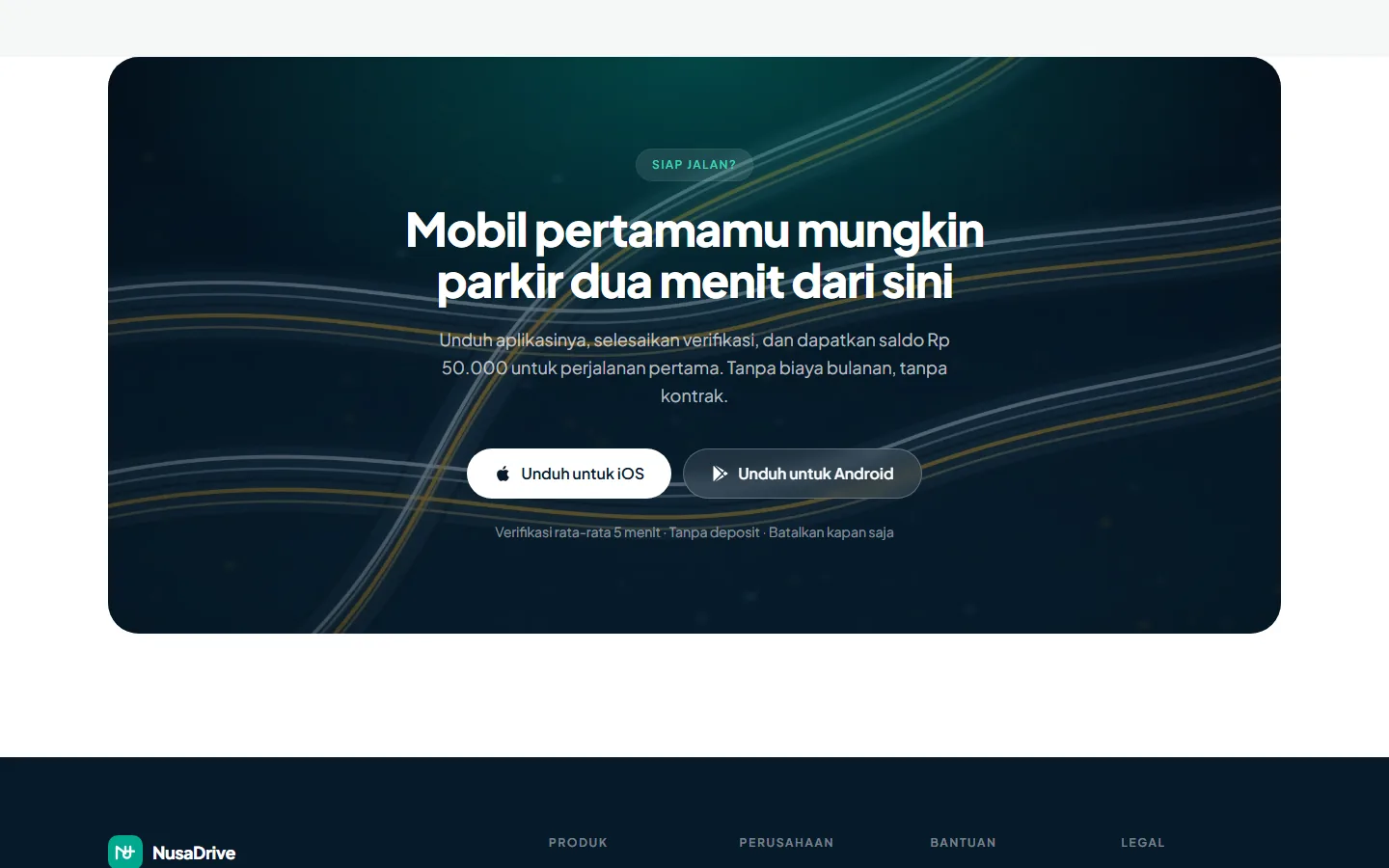
The FAQ opens on the requirements to register: ID, driving licence, minimum age, and minimum licence tenure. This is the first thing that disqualifies someone and therefore the first thing worth saying. The closing panel is a download with a stated verification time, so the last screen sets an expectation instead of making a promise.
Validation & iteration
- 01
- 02
- 03
Outcome
- Live at nusadrive-nine.vercel.appchecked 1 September 2026
- How it works, fleet, pricing, service area, protection tiers and FAQ, all on one pagechecked 1 September 2026
- Desktop and phone layouts both shippedboth captured for this case study
What shipped is the decision surface: everything a prospective renter needs to judge the model before downloading anything — the fleet with prices, the coverage drawn as a map, the protection tiers with their excess, and the registration requirements stated in the FAQ rather than discovered at signup.
The app itself is behind the download, so what this case study can show is the argument, not the rental.
Reflection & limits
The site is doing the whole job of persuasion for a product whose actual experience is in an app nobody can see from here. That gap is the weak point: every promise on the page — twenty minutes free, unlock in sixty seconds, park anywhere in the zone — is checkable only after installing.
A version of this that trusted its own argument would put one real flow on the page: the map, the hold, the unlock, playable without an account.